2025 Opens Examination
2025 Examination Information
The International Neuroscience Olympiad (INO) is a 501(c)(3) non profit organization that brings together curious young minds from around the globe to explore neuroscience. Through competitive exams, events, and collaborative learning, INO aims to make neuroscience accessible and exciting for students worldwide. INO is an international neuroscience olympiad and brain science competition, an olympiad to do for students seeking a global neuroscience contest.
Benefit from our no-cost, impactful programs for young neuroscientists
2025 Examination Information
Student research presentations
Opportunities for students
Practice for the Open Exam
Practice for the Semi Exam
Student-led organizations and community partners.

1k+ participants, 46 countries, 30 U.S. states











































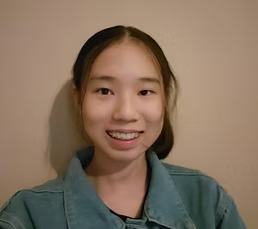
Annie Zhou is a junior at Plano West Senior High School in Texas with a strong interest in neuroscience and medicine. She is conducting research on post-translational modifications of tau protein in Alzheimer's disease. Passionate about neuroscience outreach, she founded NeuroHub, featuring student-written blog articles that make neuroscience topics accessible to a wider audience. Annie aspires to become a neurosurgeon, and in her free time, she enjoys dancing, practicing Taekwondo, and volunteering at her local senior center.
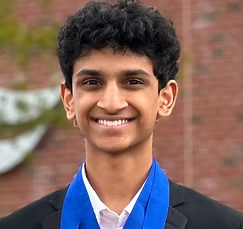
Samarth Basanth is a high school junior at South Windsor High School in Connecticut with a deep passion for neuroscience, focusing on innovative methods for detecting neurodegenerative diseases. He shares his research at international science fairs and in publications, while also conducting studies on Alzheimer's biomarkers at Yale. Driven by a commitment to health equity, Samarth founded Samanate, dedicated to health equity advocacy and community support. He also leads Science Speaks, a TEDx-style platform, and Bobcat STEWS, a district-wide STEM newspaper, to foster scientific curiosity and dialogue. Outside of academics, Samarth competes nationally in Taekwondo and enjoys playing volleyball in his free time.
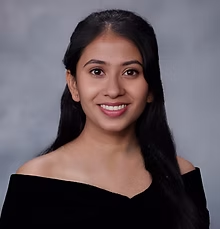
Diya Patel is a high school senior from Los Angeles, CA. She has been fascinated by the brain since fourth grade - especially how memory and sleep work - and she loves reading and researching all things sleep-related. She even recently published a study on brain EEGs during sleep. She is passionate about health advocacy for rural communities due to her rural upbringing, and she hopes to make a difference as a neurologist one day. Outside of science, she enjoys dancing and making origami with her sister.
Cutoff scores required to advance at each stage of the competition are listed below. Scores may vary year to year based on overall performance and judging standards; the values shown reflect the official cutoffs for each season.
Scores shown are out of 60.
The International Neuroscience Olympiad (INO) is research-based competition dedicated solely to the field of neuroscience. The INO is a unique initiative that aims to foster scientific curiosity and promote neuroscience education among young minds.
We believe that cultivating a deep understanding of neuroscience in students aged 13-18 is essential for nurturing the next generation of thinkers, innovators, and problem-solvers. We need to move beyond rote memorization and ignite curiosity through hands-on engagement with real-world challenges.
The INO highlights students' understanding of contemporary neuroscience, encouraging them to stay abreast of the latest developments and integrate new knowledge into their thinking.
By presenting real-world problems, the INO emphasizes the practical application of neuroscience, nurturing participants' abilities to devise innovative solutions and apply theoretical concepts to real-life scenarios.
The INO motivates students to actively engage in neuroscience research, fostering curiosity and a passion for discovery.
Recognizing the importance of research competencies, the INO is designed to cultivate critical qualities such as creativity, critical thinking, and analytical skills. These foundational skills are essential not only in neuroscience but across all scientific disciplines.
By bringing together students from diverse backgrounds, the INO promotes collaboration, cultural exchange, and a global perspective on neuroscience research.
The International Neuroscience Olympiad (INO) is a research-based competition that challenges participants to apply and expand their understanding of neuroscience.
The "Opens" round is a thorough evaluation that covers a wide range of tasks including analyzing research papers, interpreting scientific data, and formulating questions. This stage is designed to assess participants' analytical and critical thinking abilities. The open round primarily consists of multiple-choice questions.
Starting October 19th, registered students will receive their login credentials to access the INO Open Examination. The open examination will be conducted in two sessions: one at 6 PM EST on October 25th and another at 8 AM PST on October 26th to accommodate participants from different time zones. The open exam round will take place virtually through a portal on our website, allowing students worldwide to take part. We also anticipate in-person testing centers in select locations in China.
Location: Virtual & In-Person | Format: 40 Questions (35 MCQ & 5 Short Answers)
Date: October 25th & 26th | Duration: 60 Minutes
Location: Virtual & In-Person | Format: 20 Questions (10 MCQ & 10 Short Answers)
Date: January 17th | Duration: 120 Minutes
Participants who meet a predetermined cutoff score, based on overall performance in the Open examinations, will advance to the semifinals. In this stage, the challenge intensifies with free-response questions evaluated by qualified researchers, delving deeper into the participants' ability to articulate and apply their understanding of scientific concepts.
Location: Virtual | Format: Research Proposal Case Study
Date: February to March | Duration: 2 weeks
The top 20 participants will formulate a research proposal in a case study format. Finalists will be provided with a rubric for their live submissions, which will be graded by esteemed faculty in the field. The 1st place winner will receive a specialized research opportunity with faculty from a Top 20 university worldwide or an equivalent cash prize, while the top 3 places will be awarded additional sponsor prizes, opportunities for media exposure, research opportunities, and recognition.
Benefit from our no-cost, impactful programs for young neuroscientists
Analyzing research papers
Interpreting scientific data
Formulating questions
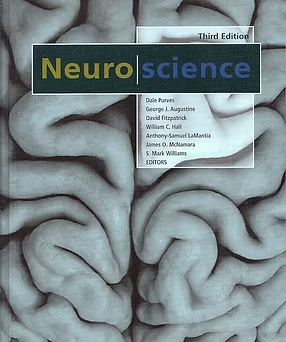
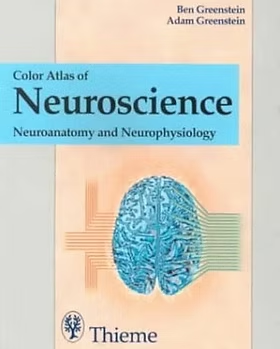
Exam questions for the INO will be drawn from these authoritative texts. Participants are encouraged to explore these resources to deepen their understanding of neuroscience and excel in the competition. Other than these textbooks, we utilize recent studies in neuroscience, so we encourage participants to keep up to date with the latest neuroscientific discoveries.
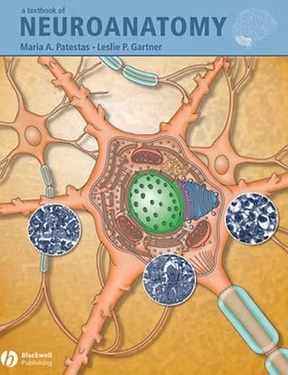
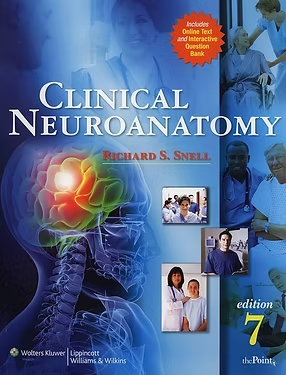
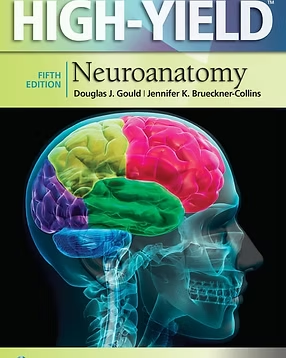
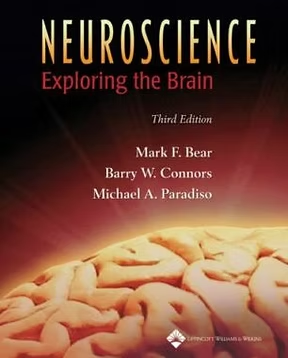
2026 registration for the International Neuroscience Olympiad (INO) will open soon. The registration button below will go live once it opens. For registration questions, email contact@ino-global.net.
We have established a strategic partnership in Asia with ASEEDER, one of the longest-standing and largest competition platforms in the region.
Schools and students located in the following Asian countries, please register through ASEEDER through this link: https://www.seedcomp.asia/ino-en/
Bangladesh, Bhutan, Brunei, Cambodia, China, India, Indonesia, Japan, Kazakhstan, Kuwait, Kyrgyzstan, Laos, Malaysia, Mongolia, Myanmar, Nepal, Pakistan, Philippines, Qatar, Russia, Saudi Arabia, Singapore, South Korea, Sri Lanka, Tajikistan, Thailand, United Arab Emirates (UAE), Uzbekistan, and Vietnam.
If you are not located in one of the countries above, please fill out the form below.
contact@ino-global.net
Hosted by the International Neuroscience Organization (INO), the NEXUS (Neurotechnology and Ethics Exchange for Universal Scholars) Essay Contest is a global competition inviting high-school students to explore the rapidly evolving frontier of brain science.
You can critically analyze breakthroughs, propose future applications, or navigate the moral dilemmas of neuroscience.
All submissions must be received by May 28, 2026 at 5:00 AM EST. Late submissions are not accepted.
Three winning essays will be officially published and showcased on the INO Global platform.
Other top finalists will receive a Certificate of Excellence, and all eligible entrants will receive a Certificate of Recognition.
Please ensure all information is accurate, as it may be used for certificates and potential publication.
Submission deadline: June 24, 2026 at 11:59 PM EST.
Good luck, and most importantly, have fun.
All tasks, research endeavors, and submissions within the International Neuroscience Olympiad must be independently completed without collaboration with others.
The use of generative AI, AI tools, or any automated software that enhances research capabilities beyond standard means is strictly prohibited to ensure fairness.
Competitors are prohibited from using VPNs or any technology that alters their real-time location or facilitates anonymous internet access during the competition.
Direct or indirect communication with fellow competitors about any aspect of the competition, including discussions on public forums or social media, is strictly forbidden.
The use of multiple logins to access the competition platform or any attempts to exploit system vulnerabilities are strictly prohibited and will result in immediate disqualification.
2025 Examination Information
Curriculum
Mock Open Exams
Mock Semi Exams
As a participant in the International Neuroscience Olympiad (INO), I pledge to uphold the highest standards of integrity, honesty, and ethical conduct. I commit to submitting only original work, giving proper attribution, and avoiding all forms of plagiarism or dishonest behavior. I will respect collaboration rules, handle data transparently, and maintain the confidentiality of shared information. My conduct will be professional and respectful, adhering to all competition rules and guidelines. I accept responsibility for my actions, will promptly report any violations, and embrace the principles of fair competition. I understand that breaching this commitment may lead to serious consequences, including disqualification.
At the International Neuroscience Olympiad (INO), we are committed to protecting the privacy and confidentiality of our participants' personal information. This Privacy Policy outlines how we collect, use, disclose, and safeguard your information during the course of our competition.
By participating in the INO, you acknowledge that you have read and understood this Privacy Policy and agree to its terms and conditions.

Co-Chair

Co-Chair

Vice Chair
Design Executive Director

Design Executive Director

Design Executive Director
Question Development Executive Director

Question Development Executive Director
Systems Administrator
For registration questions, partnerships, and sponsorships, email contact@ino-global.net. We respond fastest by email.
Email is the fastest way to reach the INO team.
Questions about INO, timelines, or collaborations.
Eligibility, registration steps, and student support.
Partner with INO and support student opportunities.
A patient arrives in the emergency room presenting with involuntary jerking movements and progressive cognitive decline. Doctors conduct genetic testing revealing an expanded HTT gene CAG repeat. What condition does the test result successfully conclude?
When observing reduced dopamine levels in the substantia nigra, the disease inflicted causes the aggregates of WHICH protein?
Which protein is mutated in Wilson's disease leading to impaired copper transport and accumulation?
In a study on fear conditioning, researchers observed rapid plasticity in the lateral amygdala. Which neurotrophic factor, released by the postsynaptic neuron, is crucial for this process?
Which neurotransmitter is primarily involved in the fight or flight response and is produced in the adrenal medulla?
Which part of the nervous system, brain region, is primarily responsible for regulating hunger and thirst?
Which lysosomal enzyme deficiency is responsible for the accumulation of sphingomyelin in Niemann-Pick Disease Type A and B?
During a call, EMTs attend to a patient exhibiting symptoms of severe depression and anxiety. They transport the patient to the nearest hospital, where the patient undergoes an MRI revealing a decrease in the hippocampal volume. Which hormone is most likely elevated in this patient?
In multiple sclerosis, MS, the immune system attacks which component of the nervous system?
A patient involved in a severe car accident suffers from partial damage to their Broca's area. What should this patient expect difficulty with?
In Alzheimer's disease, what type of plaque accumulates in the brain?
Which neurotransmitter is associated with feelings of pleasure and reward?
Which type of cell primarily consists of the blood brain barrier, or BBB?
Which of the following is a key pathological hallmark of frontotemporal dementia, FTD?
Which of the following neurotrophic factors is primarily involved in the survival and maintenance of dopaminergic neurons in the substantia nigra?
Which specific microRNA has been implicated in the regulation of amyloid precursor protein, APP, expression in Alzheimer's disease?
Which form of prion disease is characterized by rapidly progressive dementia, myoclonus, and distinctive spongiform changes in the brain?
Which enzyme involved in the urea cycle has been linked to hyperammonemia and hepatic encephalopathy when deficient?
Which inherited disorder is characterized by progressive neurodegeneration due to the accumulation of lipofuscin in the body's tissue?
Which molecular chaperone is crucial for the proper folding and function of the CFTR protein mutation that causes cystic fibrosis?
The intricate process of neurotransmitter release at the synapse involves a precise sequence of molecular events. Which of the following accurately depicts the critical steps in this process, beginning with the arrival of an action potential and culminating in vesicle fusion?
Long-term potentiation, LTP, is a complex synaptic phenomenon implicated in the formation of long-term memories. It involves persistent strengthening of synapses between neurons. Which of the following best characterizes LTP?
Which statement accurately describes a feature of CaM kinase II and its regulation?
Neurons in the auditory cortex with ________ characteristics tend to have receptive fields that are large and encompass both contralateral and ipsilateral sides due to their bilateral excitatory input.
In sound localization, why do neurons in the medial superior olive, MSO, respond best when they receive coincident input from both ears?
A patient walks into the clinic with dry mouth, blurred vision, difficulty swallowing, constipation, and urinary retention. Further analysis reveals the malfunction of a specific neurotransmitter receptor. Which type of receptor is most likely impaired?
What is the role of clock-controlled genes in the circadian rhythm mechanism?
Which statement accurately reflects the role of the auditory cortex, AI, in sound localization?
In a study of fear conditioning, researchers want to examine the role of the basolateral amygdala. Which of the following techniques would be most appropriate for temporarily inactivating this region in mice?
A patient with damage to the ventromedial prefrontal cortex would most likely show deficits in:
Dr. Lee, a neurologist, is evaluating Mr. Thompson, a 55-year-old male presenting with progressive muscle weakness, dysarthria, and dysphagia. The patient reports fasciculations and muscle cramps. Symptoms began 12 months ago with left hand weakness, gradually progressing to involve both arms and legs. Examination reveals widespread fasciculations, increased muscle tone in affected limbs, and hyperreflexia. Diagnostic workup includes:
1. EMG showing active denervation in multiple body regions.
2. Nerve conduction studies with reduced compound muscle action potentials.
3. MRI revealing mild cortical atrophy.
4. Genetic testing negative for common ALS-associated mutations.
Discursive Question: Discuss the most likely diagnosis based on Mr. Thompson's clinical presentation and diagnostic results. Explain the pathophysiological mechanisms for the observed upper and lower motor neuron signs.
Dr. Witherspoon, a neurologist, is evaluating Mrs. Kanken, a 62-year-old female presenting with gradually worsening gait instability, tremors, and bradykinesia. She also reports difficulty beginning movements and frequently stumbles upon herself and falls. Symptoms started 18 months ago with a resting tremor in her right hand, progressively involving both sides of her body. The doctor conducts an examination and notices cogwheel rigidity, a shuffling gait, and a masked facial expression. Diagnostic workup includes:
1. DaTscan revealing reduced dopamine transporter uptake in the basal ganglia.
2. Blood tests within normal limits, excluding secondary-associated mutations.
3. MRI showing mild brainstem atrophy with no significant cortical abnormalities.
4. Genetic testing negative for Parkinson's disease-associated mutations.
Discursive Question: Based on the clinical presentation and diagnostic results of Mrs. Kanken discuss the most likely diagnosis. Explain the pathophysiological mechanisms that could account for the observed motor symptoms and neurological findings.
Dr. Perelman, a neurologist is evaluating Mr. Kumar, a 44-year-old male who presents with intermittent episodes of severe stabbing facial pain localized to the right side of his head. Mr. Kumar reports the pain arises whenever he talks, chews, or lightly brushes the area. He reports they first started 6 months ago and added they were initially brief episodes lasting anywhere from 10-15 seconds and have now progressed to longer and more frequent episodes ranging from 3-5 minutes. Mr. Kumar reports no history of trauma or prior neurological conditions. Physical examination reveals no sensory deficits or muscle weakness in the face. The patient is visibly distressed during an episode. Diagnostic workup includes:
1. MRI of the brain reveals a loop of the superior cerebellar artery close to the right trigeminal
nerve root.
2. MR angiography confirms neurovascular compression at the root entry zone of the trigeminal
nerve.
3. A complete blood count, CBC, is conducted and reveals no abnormalities.
4. Electroencephalography is conducted and shows no significant abnormalities in facial nerve
conduction.
Discussion Questions:
A. What is the most likely diagnosis for Mr. Kumar based on his clinical presentation and diagnostic
findings? Provide a rationale for your diagnosis.
B. Explain the underlying pathophysiological mechanism that accounts for the pain experienced.
Explain the role of neurovascular compression in the development of his symptoms.
C. Given the diagnosis, provide a treatment option, and note the treatment can include both
pharmacological and surgical approaches. Discuss the indications for the treatment chosen.
1A. Diagnosis: Parkinson’s disease
1B. Explanation: Degeneration of dopaminergic neurons in the substantia nigra reduces excitation of the direct pathway and increases activity of the indirect pathway, leading to excessive inhibition of thalamocortical motor circuits.
1C. Explanation: Motor weakness is absent because corticospinal motor neurons remain intact; bradykinesia results from impaired movement initiation and scaling, not loss of muscle strength.
2A. Diagnosis: Mesial temporal lobe epilepsy
2B. Explanation: The hippocampus, amygdala, and adjacent limbic structures generate abnormal synchronized discharges responsible for altered awareness and emotional phenomena.
2C. Explanation: The temporal lobe’s role in memory and emotion explains experiential auras such as déjà vu and fear, while limited motor cortex involvement prevents generalized convulsions.
3A. Diagnosis: Prosopagnosia
3B. Explanation: Damage to the fusiform face area in the ventral occipitotemporal cortex disrupts specialized facial identity processing.
3C. Explanation: Functional neuroimaging would show reduced activation of the right fusiform face area during face recognition tasks, demonstrating the specialization of this network for processing faces.
3D. Explanation: This region is selectively tuned for face recognition, so its damage impairs facial identity processing while sparing object recognition and basic visual perception.